Website Design for Praxis Fire Solutions
Aligning digital service touchpoints with business objectives
The Problem
We needed to help users understand and navigate a complex portfolio of offerings.
Praxis Fire Solutions (Praxis) is an emerging start-up delivering fire training and safety services to fire departments, businesses, and emergency responders. As the company prepared to bring its validated offerings to market, it needed a digital service touchpoint that could clearly communicate its value and support the full client journey.
Praxis offers a variety of solutions, ranging from fire training models to fire safety pre-plans to custom solutions. Because of its plethora of product and service offerings, it was important to present the information in a way that doesn't confuse or overwhelm users.
How can we structure the abundance of information in a way that is clear, professional, and engaging while maximizing conversion rates?
The Solution
I structured the information architecture to guide users through the service journey.
Because Praxis is a founder-led passion project, I worked closely with the founder to understand the organization’s service model, operational realities, and primary user groups. Through collaborative working sessions, we identified a core service challenge: enabling prospective clients to move seamlessly from learning about Praxis’s offerings to confidently booking a training session.
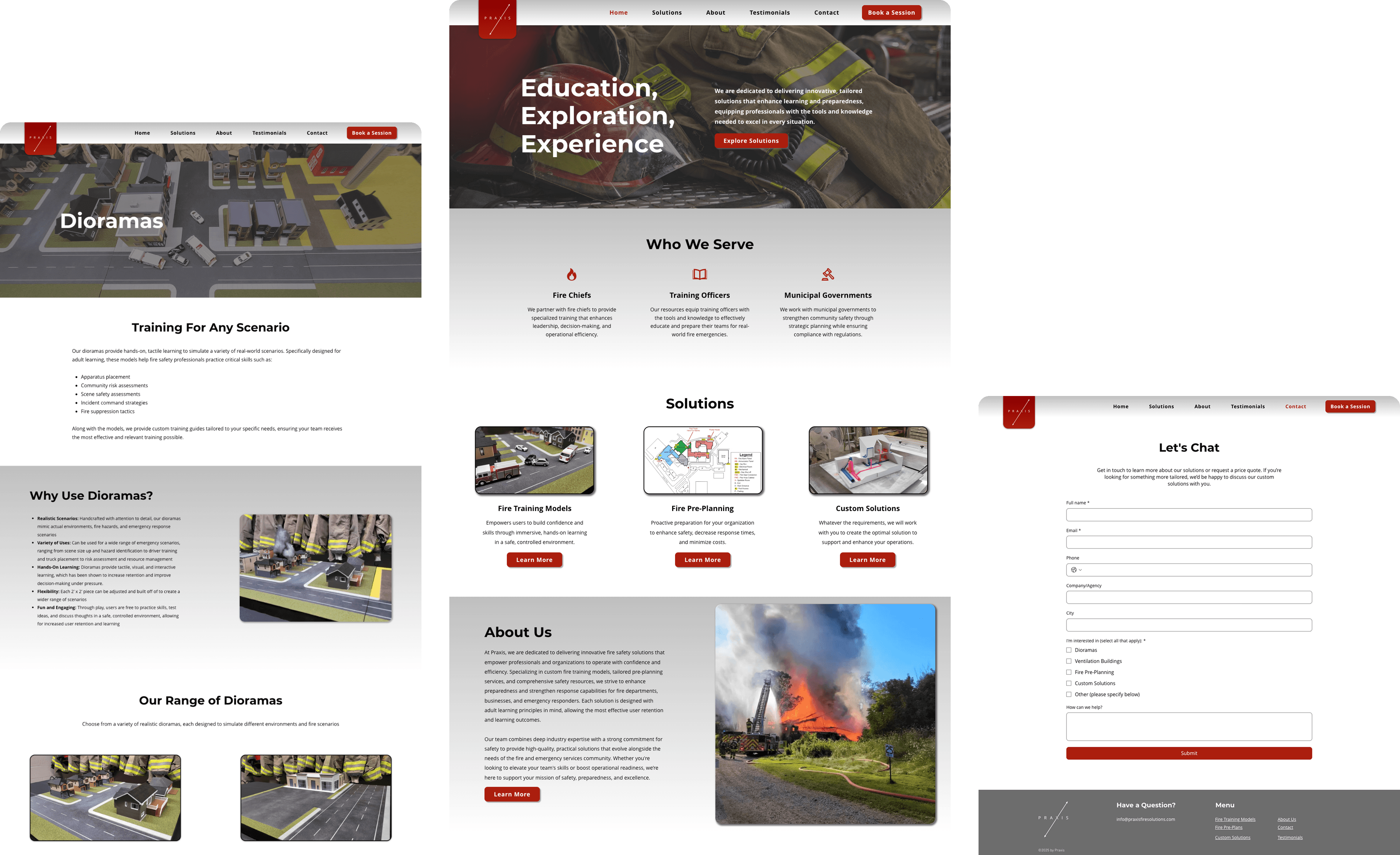
The website was designed as a frontstage entry point to the Praxis ecosystem, guiding users through information discovery, decision-making, and conversion in a way that felt clear, intuitive, and aligned with both user needs and business objectives. Key design elements, including a simplified navigation structure, clear calls-to-action on every page, and a minimalistic visual approach, work together to guide users seamlessly from information discovery to booking a training session, aligning the digital experience with both user needs and business objectives.

Problem Definition
The site needed to deliver accessible information and drive conversions.
Praxis offers a diverse range of fire training and safety solutions, so the first step was to gain a holistic understanding of their service model, business goals, and target users.
I conducted a Discovery Session with the founder, which allowed me to explore the organization’s offerings in depth and understand how the website could function as a digital touchpoint in the overall service journey.
Key objectives of the session included:
Clarifying the company mission and strategic goals
Mapping each product and service offering to understand its value and purpose
Identifying the primary target audiences for the website
Reviewing competitors to understand market positioning
Capturing the founder’s vision for the website and its role in the client experience
This session provided a foundational understanding of both the service and user context, enabling the design of a website that would guide prospective clients seamlessly from discovery to engagement.
Through our discussion, it became clear that the website needed to function as a strategic digital touchpoint that:
Guides users through relevant information in a clear, organized, and accessible way
Engages visitors and supports their journey from discovery to booking or inquiry
Reflects the professionalism and trustworthiness expected in the fire safety industry
Competitive Analysis
Organizations in this field have a clear typology but lack structure.
Although Praxis is unique in its offerings, fire industry organizations tend to follow common patterns in how they present products and services digitally. To understand the landscape and user expectations, I analyzed key competitors to identify:
Effective ways they communicate offerings and structure information
Industry norms that shape what users expect when exploring fire training and safety services
Opportunities to differentiate Praxis while meeting user needs and maintaining trust
This analysis helped ensure that the website would both align with user expectations and stand out as a unique, user-centered service touchpoint.
First Due
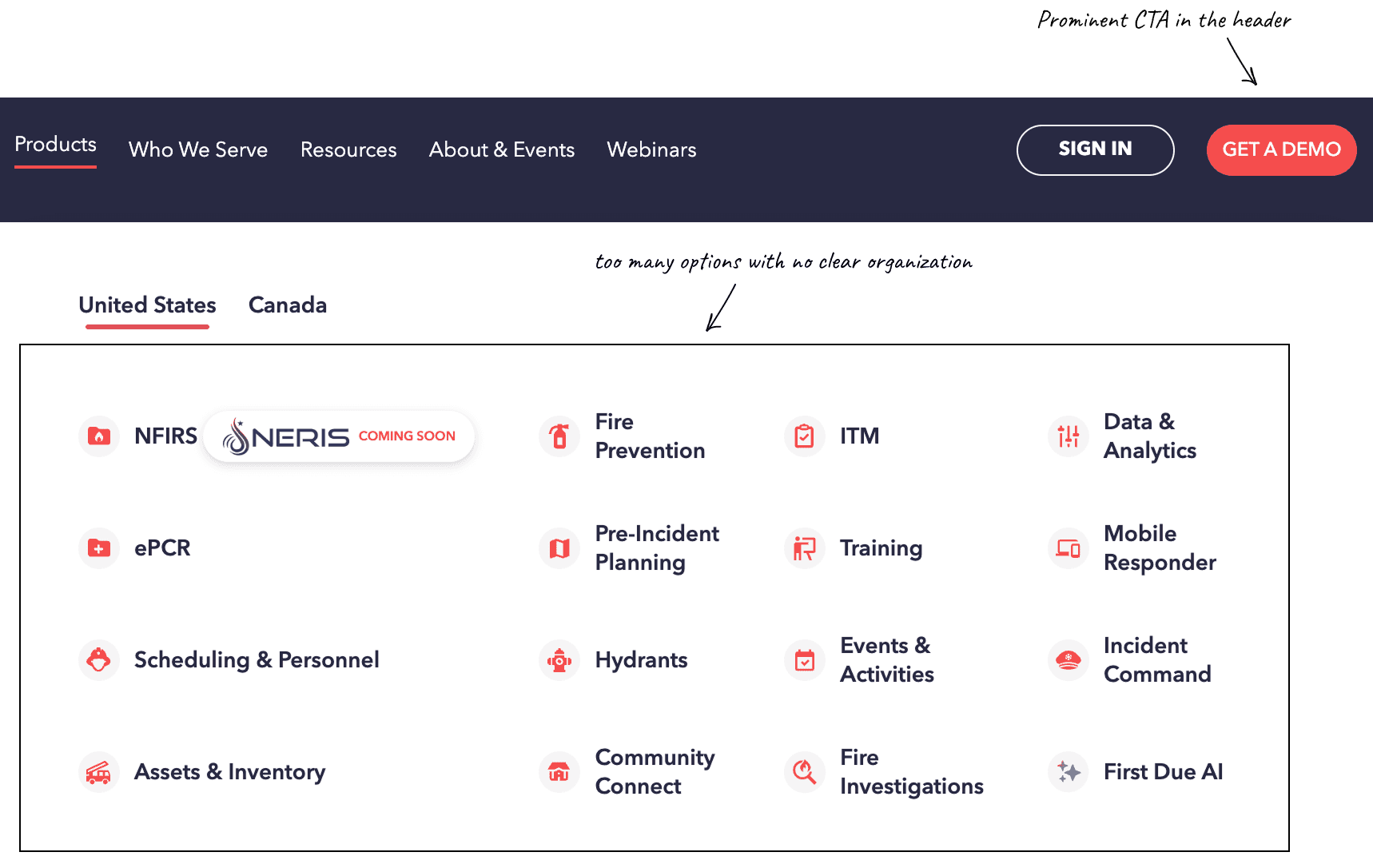
First Due is a well-established provider of software solutions for fire departments and emergency services. Their website acts as a key digital touchpoint, guiding users through clear calls-to-action to important sections like Products and Contact.
However, when exploring their product offerings, the user journey becomes confusing. The extensive list of products lacks clear organization, making it difficult for users to understand the service ecosystem, evaluate options, and make confident decisions.
This insight highlighted the importance of structuring Praxis’ offerings in a way that supports clarity, discovery, and seamless progression through the user journey
Lion Protects & Max Fire Box
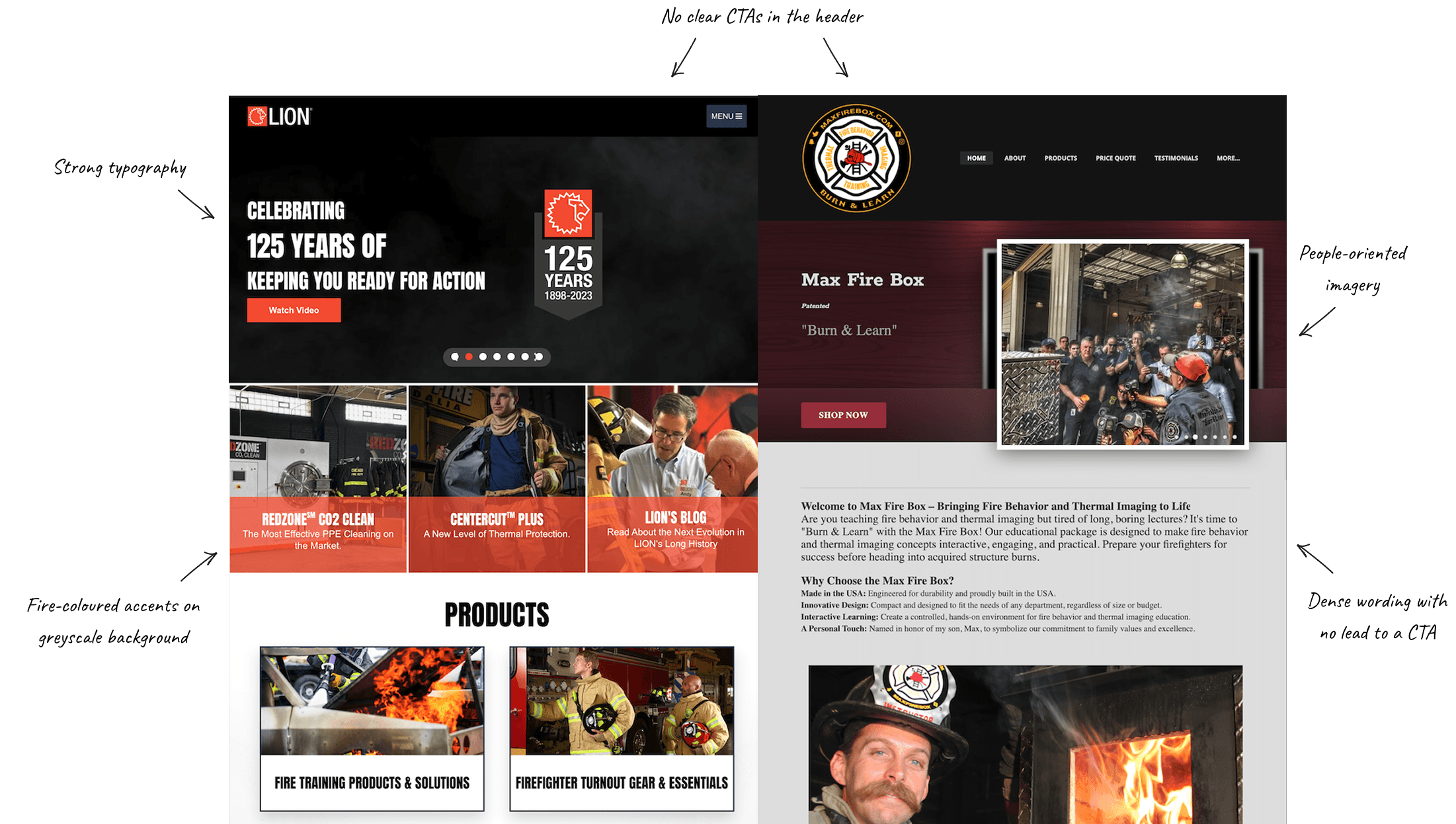
These two companies also operate in the fire safety and protection space, offering solutions from fire detection systems to portable safety equipment. Their websites serve as digital touchpoints for users exploring fire safety services, and while they exhibit some structural and formatting inconsistencies, they reflect key industry expectations:
Clear, bold typography that conveys authority and professionalism
Emotional, context-driven imagery that connects with users’ real-world experiences
A restrained color palette of greyscale with warm accents
Understanding these visual and structural conventions helped inform the design of Praxis’ website, ensuring it would meet user expectations while differentiating the brand and guiding users through the service journey with clarity and confidence.
Learnings
A balance between simplicity and sufficient information is required.
Based on my research and competitor analysis, I determined that Praxis’ website needed to function as a clear, engaging, and professional digital touchpoint that:
Guides users through relevant information with a structured and intuitive information architecture
Highlights key offerings so users can quickly understand the services available
Supports user action at every stage with calls-to-action on every page
Builds trust and professionalism through strong typography and cohesive visual design
These features ensure that users can discover, understand, and engage with Praxis’ services seamlessly, aligning the digital experience with both user needs and business objectives.
Site Map
Iteration of the service journey included streamlining user decision-making.
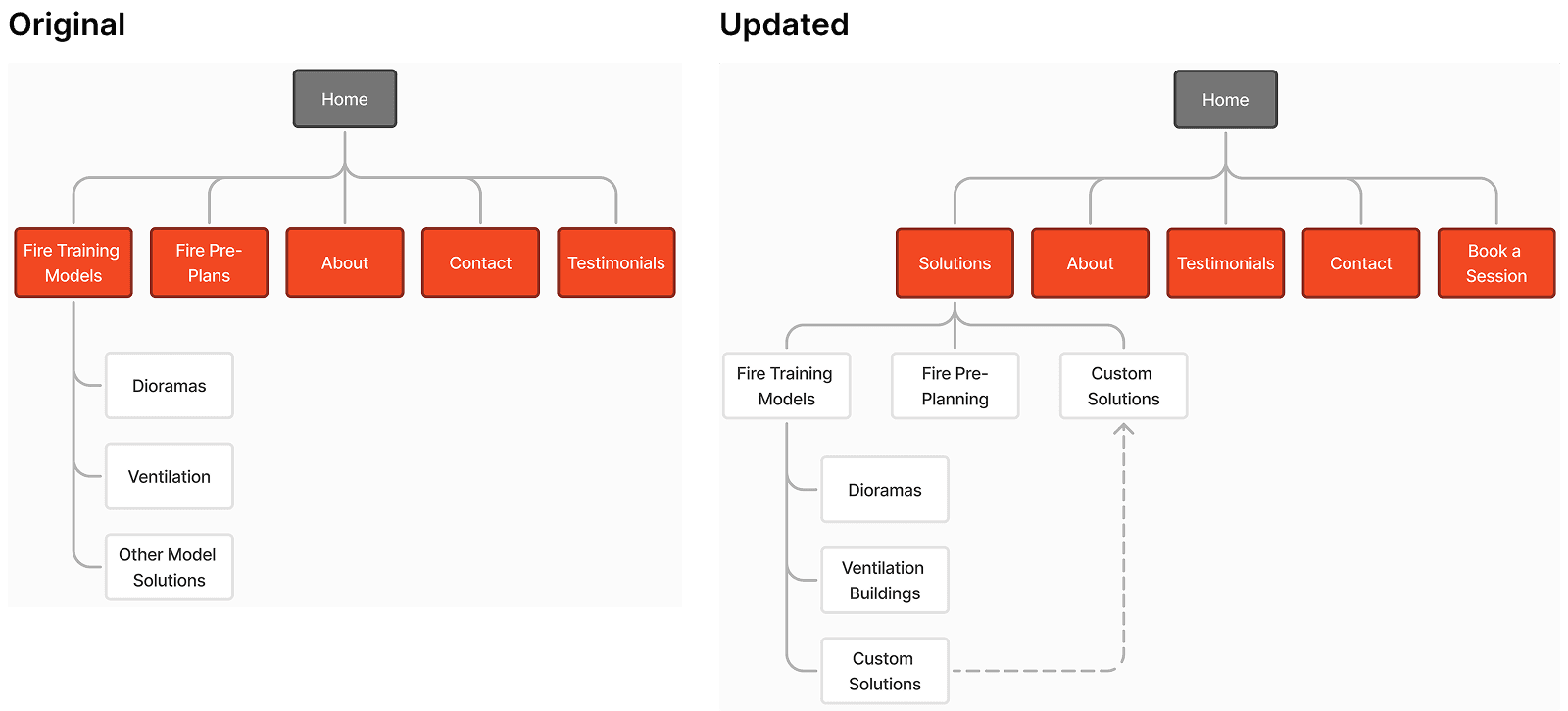
Before wireframing, I created an initial site map to structure the website as a cohesive digital touchpoint that guides users through Praxis’ services. Early feedback and review highlighted opportunities to clarify the user journey and streamline decision-making:
Consolidating all product offerings under a “Solutions” tab, with a dedicated sub-section for Fire Training Models, ensures users can see the full scope of services at a glance while highlighting key categories.
Adding a “Book a Session” page alongside the Contact page separates general inquiries from action-oriented tasks, making it easier for users to move from discovery to booking and improving the overall service flow.
Wireframes
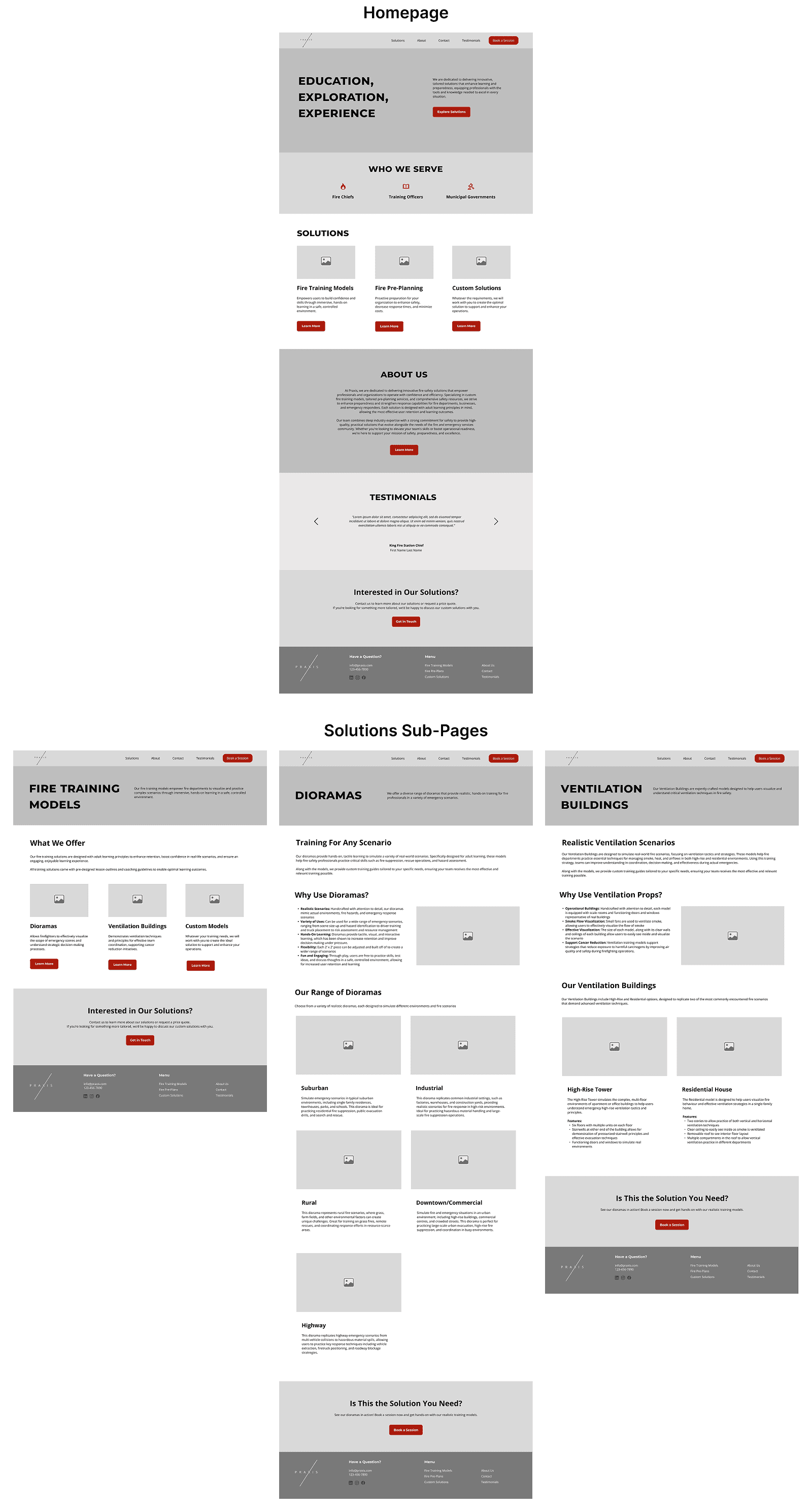
Wireframes were crucial in developing the structure of each page.
Using Figma, I created wireframes for each page to translate insights from research and discovery into a clear, user-centered service journey. Establishing the messaging early ensured that each page had a specific purpose in guiding users through information discovery, evaluation, and booking.
This stage was challenging because it required consolidating Praxis’ complex offerings into a concise, accessible format. Collaborative sessions and extensive research ensured the wireframes aligned with both user needs and business objectives, setting the foundation for a cohesive digital service experience.
The Final Result
The site guided users on their journey of discovery to booking a session.
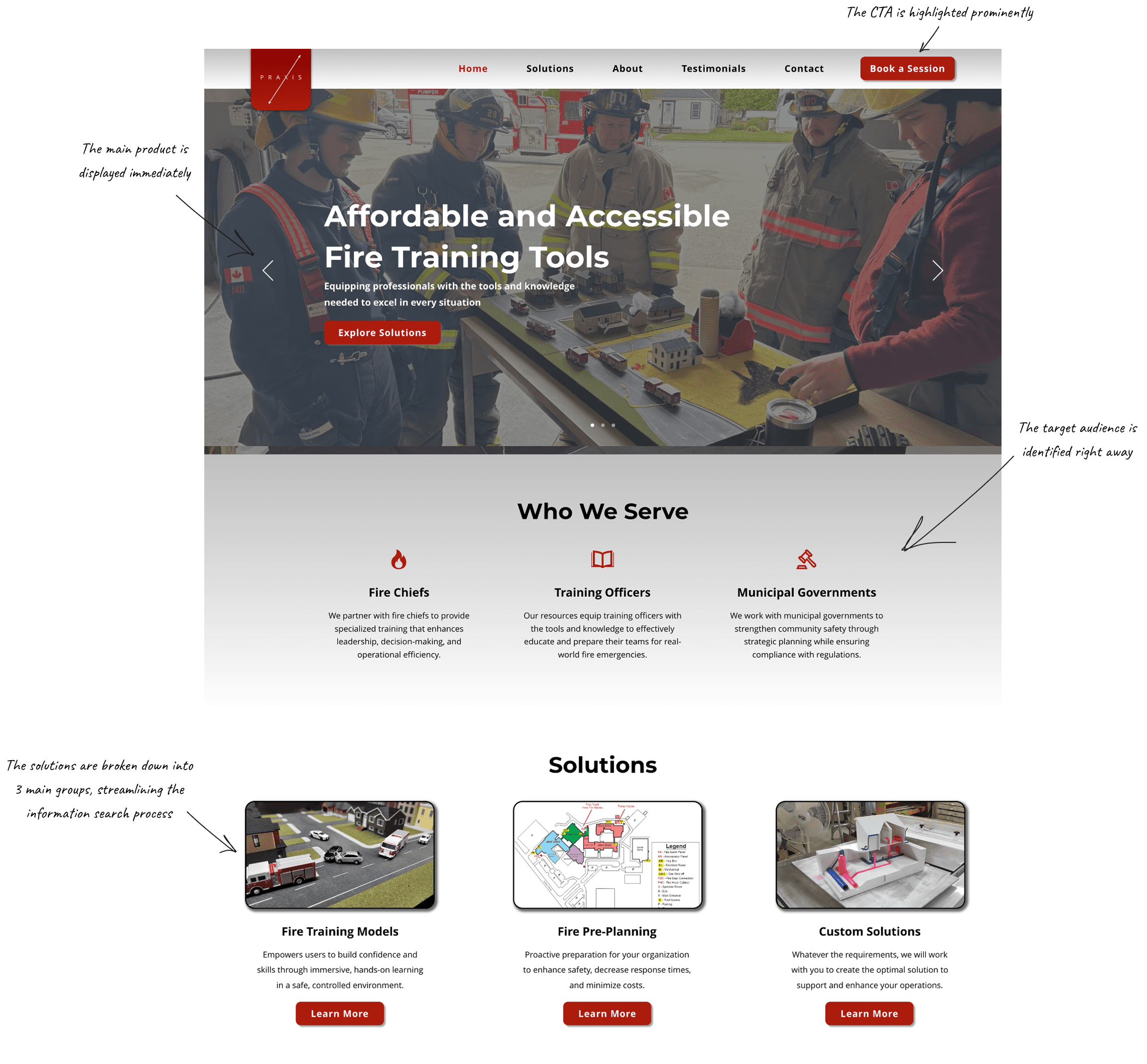
Once the wireframes were finalized, I built the website in Wix, translating the defined structure, content, and messaging into a fully functional digital touchpoint. The visual design was implemented to support clarity, engagement, and trust, ensuring that users could move seamlessly through the service journey.
Through collaborative sessions with the founder, we crafted an experience that guides users from landing on the homepage, through the streamlined solution groups, to the final step of contacting Praxis or booking a training session. The result is a website that not only communicates offerings effectively but also facilitates user decision-making and conversion, aligning with both user needs and business objectives.
Responsive Design
The key messages are clear across devices.
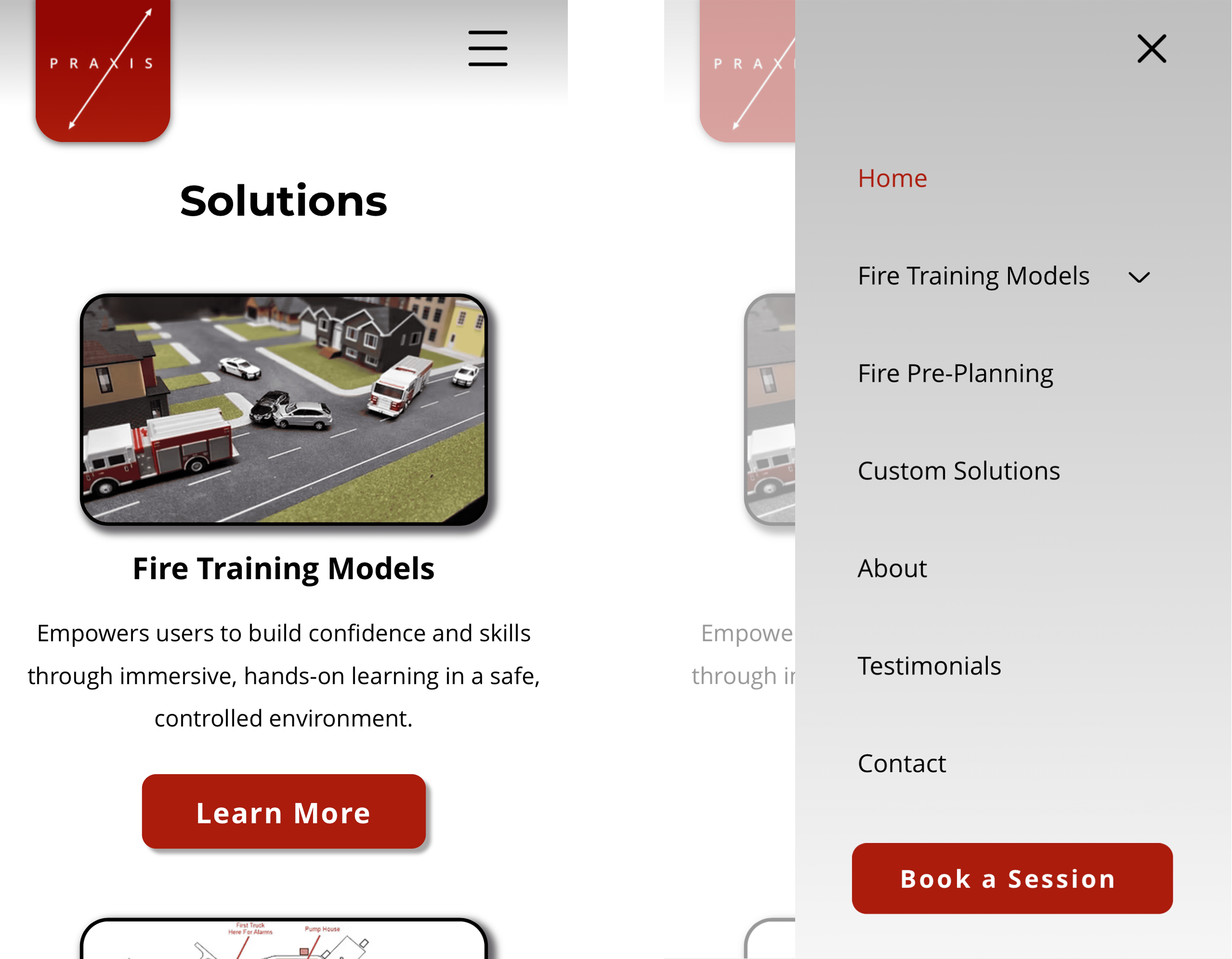
Since many users would access the site on mobile devices, it was crucial that the website deliver Praxis’ key messages clearly and consistently across all screens. The responsive design ensures that the service touchpoint remains accessible and user-friendly, allowing users to navigate offerings, understand value, and take action seamlessly, regardless of device.
Key features, such as the “Book a Session” CTA, remain prominently accessible within the hamburger menu, supporting a smooth path from discovery to conversion on any device.
Conclusion
Overcoming ambiguity with collaboration and co-creation.
Designing the Praxis website was an exciting and rewarding challenge that provided me with in-depth understanding of the unique requirements of the fire safety industry, as well as insight into the platform creation process. We began with a rough idea of what we wanted the site to achieve and then worked to make it a reality.
Despite the difficulties, such as ambiguity of the objectives in the early stages, this was overcome by continuous engagement and collaboration with the client, as well as rigorous background research into industry best practices, resulting in a final design which aligned with the vision of Praxis.
Reflecting on the project, I believe there is always room for improvement. If we had more time, I would have enjoyed creating additional customized graphics and visuals to give the site even more personality and uniqueness. Overall, this project reinforced the value of effective communication, critical thinking, adaptability, and an open-minded approach in creating a platform that meets user needs and exceeds expectations.
“Alice gave us confidence from the beginning that she truly cared about putting the vision and mission of our business into a website that represented us and spoke to our clientele. I am highly impressed by Alice's attention to detail and her ability to understand and absorb the information that was provided to her. She took the time to immerse herself into researching our products and fully understanding our business to develop best practices for each of our key objectives. The result is a website that we're extremely proud to have representing Praxis Fire Solutions.”
-Kent Gallant, Praxis founder