Researching the real-world impacts of video game worlds through ethnography
Background
Cozy games don't just entertain, they can shape real life.
It was my friend’s thirtieth birthday, and she ha transformed the upstairs of a local pub into an oasis of pink balloons and 2000s throwback music. I walk in and greet her with an excited hug before presenting her with my gift. After a few moments of catching up in the swirl of friends and chatter, I drift towards the bar. Typically, I skip the beer section and head straight for the cocktails, but this time something caught my eye. I couldn’t tell you the difference between a lager and a pilsner, yet there on the menu is a drink I know intimately: Pale Ale. I’ve crafted this artisan beverage from scratch countless times–planting the hops starters on my farm, watering them dutifully for eleven days, harvesting the vines from their tall wooden trellises, and finally placing them into kegs to ferment into the beloved drink that fetches upwards of 300 gold. Pam would love this, I think automatically, if only she was here…or real.
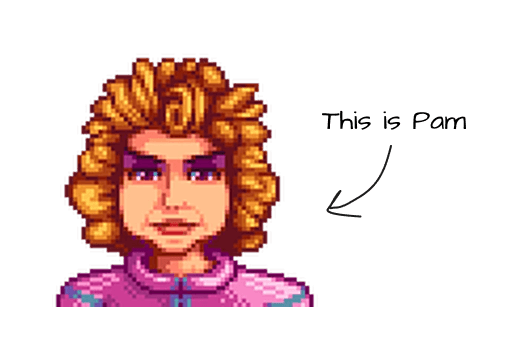
To be clear, I didn’t actually grow the hops and brew the pale ale myself. My Stardew Valley farmer did. This is just one example of the many moments where the boundaries between the game world and my daily life began to blur.
Why was a farming simulation shaping how I moved through the world? Why did I feel genuine responsibility toward pixelated characters?
Scholars have long argued that video games blur the boundary between digital and physical life, shaping how players think, feel, and act beyond the screen (Giddings, 2009; Ortiz de Gortari & Griffiths, 2016). But most of this research focuses on negative spillover — addiction, intrusion, cognitive disruption.
But my experience didn’t feel disruptive. It felt meaningful.
Stardew Valley (ConcernedApe, 2016) is deceptively simple. On the surface, it’s a farming simulation. But at its core, it’s a system built around:
Routine and time management
Emotional relationships with NPCs
Community restoration
Slow, incremental progress
It rewards patience. It normalizes care. It structures time in seasons. It makes small tasks feel significant.
As both a player and a researcher, I began to wonder: If a game is built around routines, relationships, and gentle progress — could it quietly reshape how players approach their real lives? I wanted to investigate what lingers after the console is turned off — in thoughts, habits, emotional reflections, and community conversations.
This curiosity led to the question: How do interactions with Stardew Valley’s gameworld — including its mechanics, characters, and daily actions — extend the player experience beyond gameplay and into everyday life?
Literature Review
Players influence games, and games influence players.
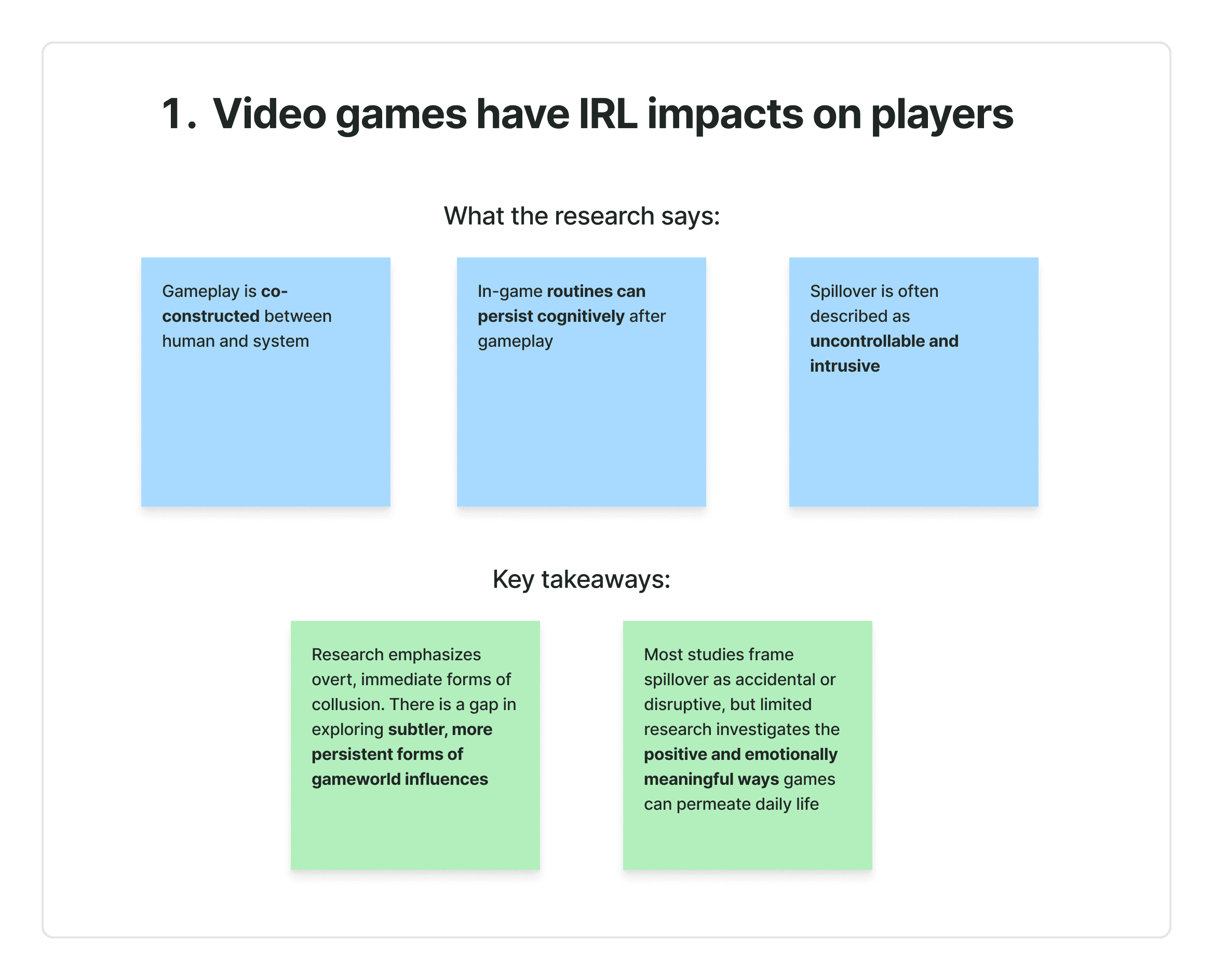
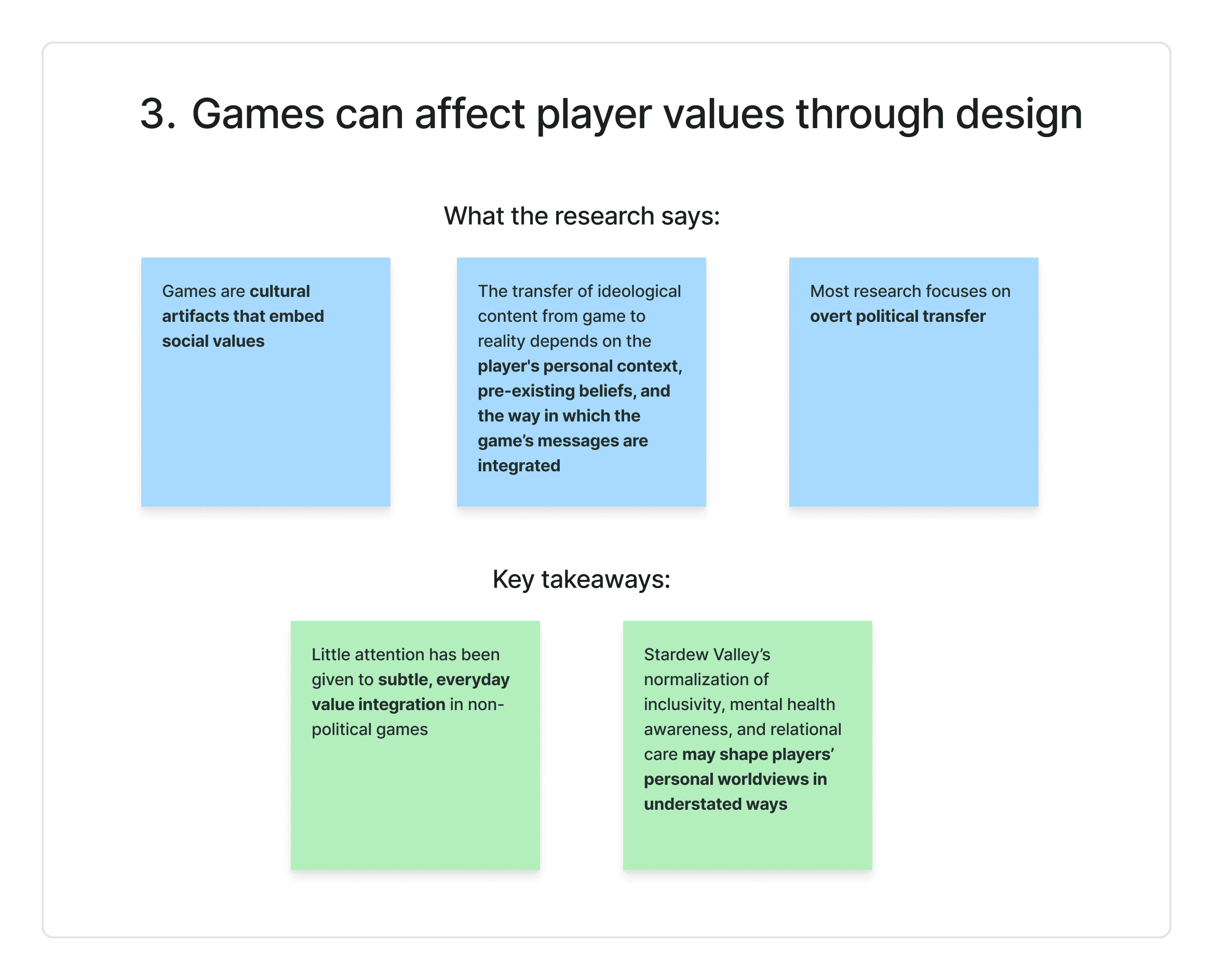
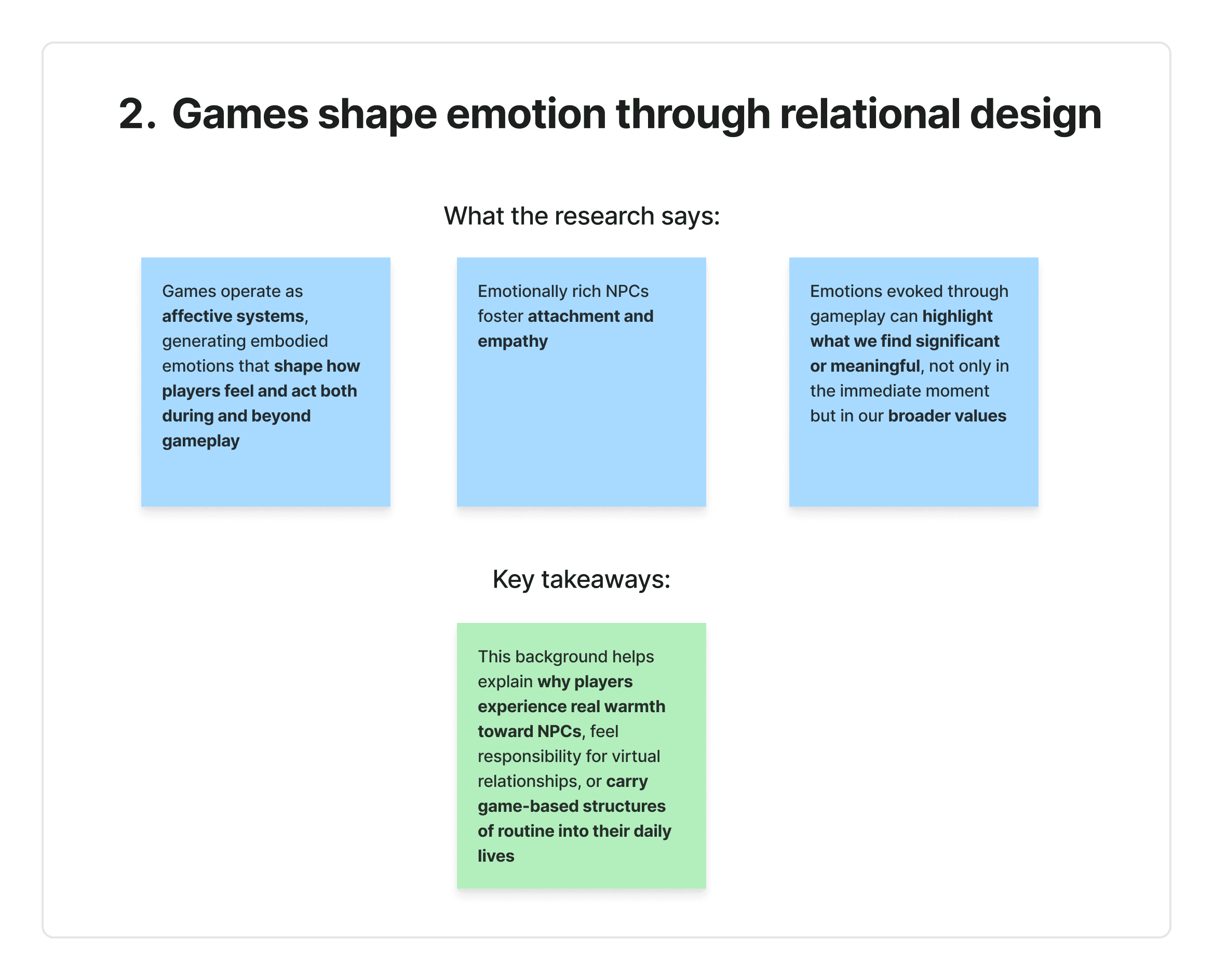
To develop a better understanding of player and game interactions, I examined existing theories on how games influence life beyond gameplay. Three key domains emerged:
Research Methodology
To understand spillover, I studied player behaviours outside the game.
To explore my research question, I conducted a digital ethnography examining how players describe real-world experiences influenced by Stardew Valley, as the community generates substantial volumes of organic content across online platforms. These spaces offer rich and diverse data created by the players themselves, reflecting genuine emotions, humour, frustrations, and reflections that occur outside the gameworld.
Field Sites
TikTok (affective, short-form spillover moments)
Reddit (r/StardewValley) (long-form reflection and discussion)
Participants
Publicly available posts from players discussing:
Real-life impacts
Emotional reactions
Behavioral changes
Reflections on characters and routines
Data Collection
Hashtag searches (“Stardew Valley IRL”)
Targeted Reddit prompts (“How did Stardew Valley impact your life?”)
Observational note-taking
In vivo coding (using participants’ own language)
Findings
When I began analyzing player reflections, I expected to find isolated examples of game-related thoughts lingering after play. Instead, clear patterns emerged. Players described consistent shifts in how they think, feel, and act — changes that extended well beyond the screen. These findings clustered into three domains: how the game reshapes mental models, how it deepens emotional reflection, and how it influences real-world habits.
Cognitive Impacts
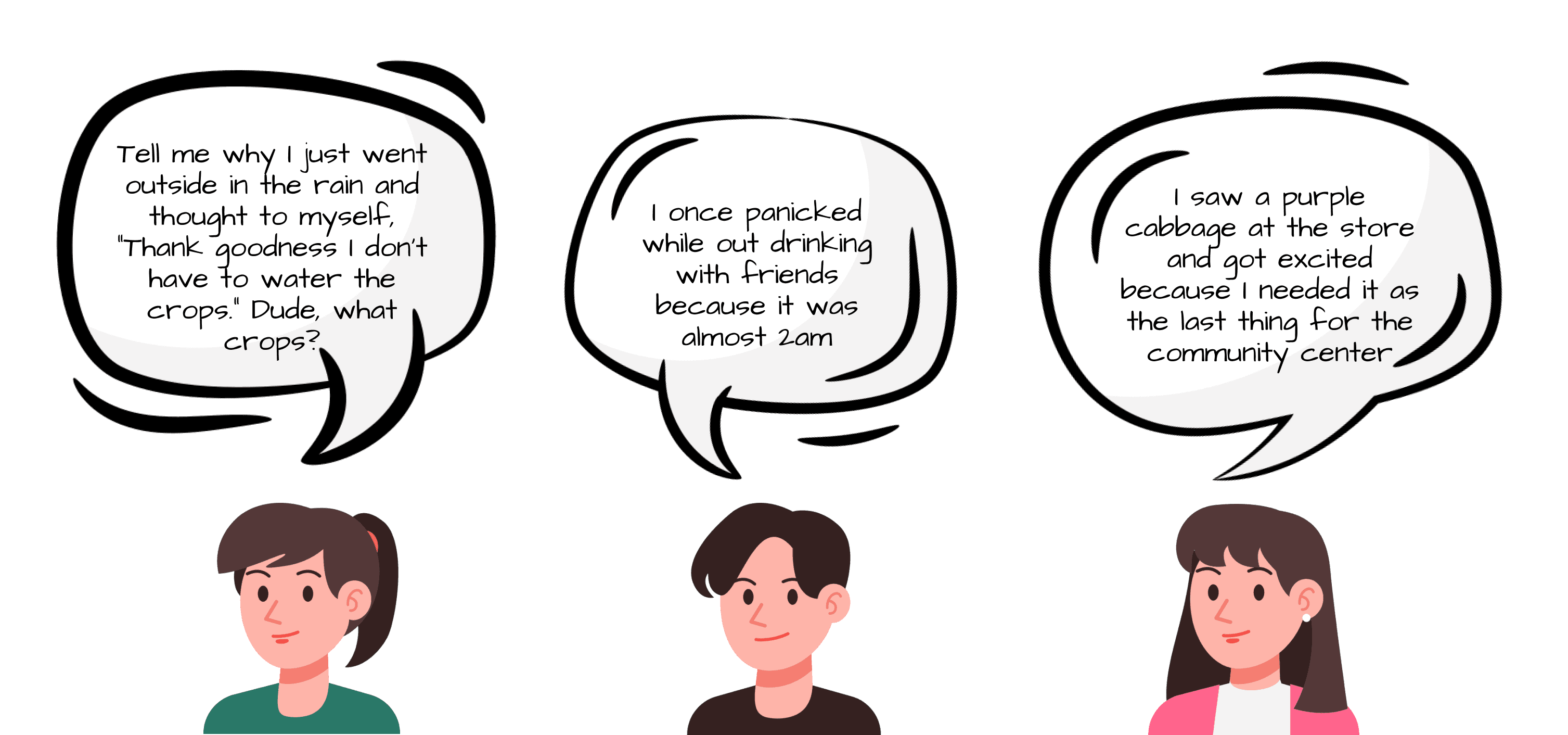
As players engage with Stardew Valley, it's not unusual for the game to linger in their thoughts long after they've logged off. The following player quotes were found on Tiktok:
These relatable moments highlight what is known as the “Tetris effect” across the Tiktok community, which is loosely based on a 2000 study where it was found that after playing prolonged amounts of Tetris, participants began to experience hypnagogic images in their minds (Stickgold et al., 2000).
But beyond these fleeting moments, a deeper pattern emerges in how players report actively applying what they learn in Stardew Valley to their real-world lives. Players have reported that skills developed from playing the game, such as time management (completing daily tasks and quests before 2 a.m.), strategic thinking (deciding which crops to plant for maximum profit each season), and resource management (evaluating whether to sell, gift, or process items for optimal progress), have helped them improve these skills in real life.
Key takeaway: players apply the mental strategies developed in the game to think critically about real-world situations.
Emotional Impacts
Whether it's the heartfelt storylines of the NPCs, the nostalgic charm of the game's aesthetics, or the serene and beautiful soundtrack, Stardew Valley consistently elicits a wide range of emotions from its players. A popular subreddit asking, “What’s something in Stardew that made you weirdly emotional?” has garnered over 140 comments, with players sharing deeply personal and touching moments (jamesdahling, 2025).
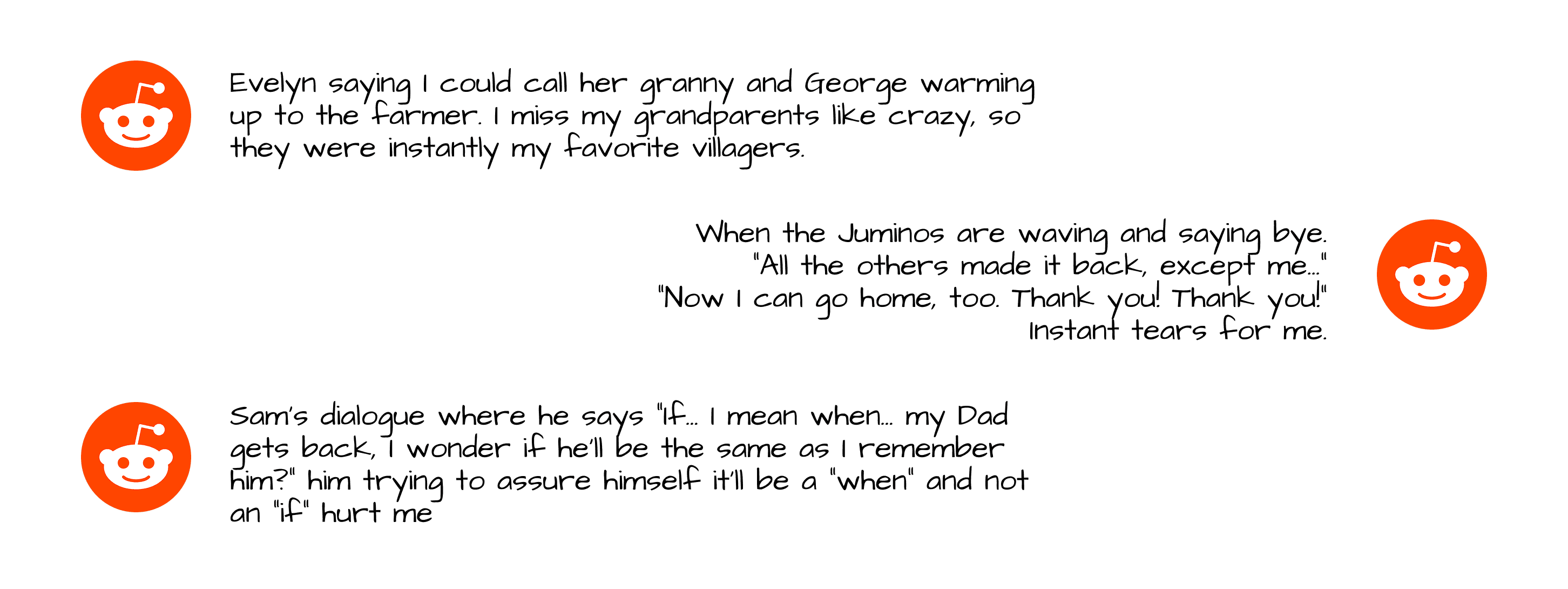
The emotional impact of Stardew Valley goes beyond just narrative moments; it also plays a role in shaping real-life relationships and self-reflection. Players have noted that their experiences with dating in Stardew Valley have prompted them to reflect on their own values and preferences.
Previous research shows that well-designed relational systems in games, such as emotionally rich NPCs with consistent personalities and evolving narratives, can elicit genuine admiration, empathy, and attachment from players. Players often respond to characters as though they were real people, with feelings evolving in tandem with the character’s development.
In the case of Vincent, it is not just his adorable character design that elicits a sense of affection and care, but also his charming dialogue and the poignancy of his family story. His father, Kent, is away at war during the first year of the game, and Vincent frequently remarks that he misses him. In winter, he expresses excitement that his father will soon return. After Kent comes back in the game’s second year, Vincent’s dialogue reveals that, although he is happy his father is home, he doesn’t seem the same as before, hinting at lingering effects of trauma.
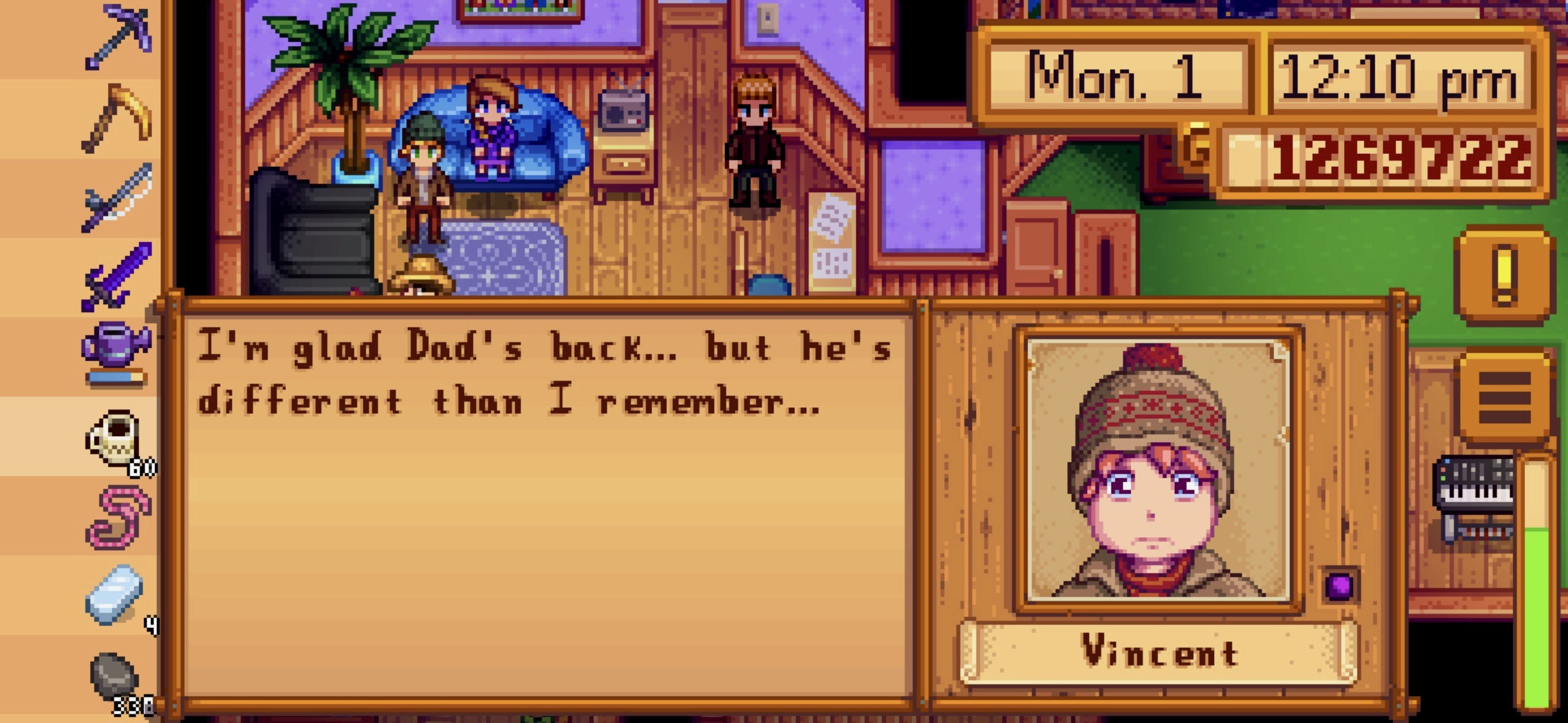
These emotionally-rich narrative details bring the characters to life, adding nuanced human dimensions that allow players to relate to them as if they were real people.
Key takeaway: emotionally rich characters prompt real-world self-reflection and emotional growth, making the game a method of introspection.
Behavioural Impacts
As players dive deeper into the world of Stardew Valley, the cognitive and emotional realizations they experience often don't stay confined to the game. Instead, they start to show up in their daily lives, prompting changes in behaviour that can feel surprisingly profound. The game, with its emphasis on routine, time management, and achieving small goals, can have a lasting influence on how players organize and approach their real-world tasks.
Take, for example, a Reddit user who shared how Stardew Valley inspired them to get their life back on track after a period of personal struggles:

Much like the daily routine of farming, this player found themselves adopting a similar structure in their own life and benefiting from it greatly. The game’s focus on small, repetitive tasks and the satisfaction of completing them translated directly into real-world habits: a newfound commitment to organization and self-care.
The impact can extend even further, leading players to make profound changes in their personal well-being. One particularly powerful example comes from a player whose connection with Shane, an NPC dealing with depression and recovery, sparked a significant shift in their own life. In a deeply personal comment addressed to the creator of Stardew Valley, ConcernedApe, a Redditor shared:

For this player, Shane’s storyline was not just a plotline within the game—it was a catalyst for life-changing behavior. The emotional resonance they felt led them to take action, prompting them to seek professional help and confront their own struggles, showcasing how Shane is not merely a collection of pixels to be interacted with, but an immensely powerful “body” that has the ability to exert influence through its interactions (Giddings, 2009).
Key takeaway: mechanics and stories within the game can be a catalyst for impactful behavioural changes in a player's life.
Synthesis
Spillover is intentional, emotional, and growth-oriented.
Across cognition, emotion, and behavior, a consistent pattern emerged:
Players are not passively experiencing spillover. They are actively integrating it.
Cognitive → Strategic thinking
Emotional → Self-reflection
Behavioral → Habit change
This reframes extended player experience as not an uncontrollable negative reaction, but an intentional process of meaning-making and self-development.
Design Implications
Intentional design shapes behaviours beyond the screen.
As both a researcher and designer, this project taught me something I now carry into every decision: digital experiences are rehearsal spaces. They are environments where users practice habits, test identities, and internalize norms. Designing responsibly means recognizing that influence and shaping it intentionally.
References
Akçakese, A. (2025). Recreational Use of Video Games: A Mixed-Methods Study on Player Experience in Stardew Valley. Sportive, 8(2), 259–287.
Anable, A. (2018). Playing with Feelings: Video Games and Affect. University of Minnesota Press.
ConcernedApe. (2016). Stardew Valley [Windows PC].
ConcernedApe. (2018). I'm ConcernedApe, creator of Stardew Valley. Ask me anything! [Online forum post]. Reddit. https://www.reddit.com/r/AndroidGaming/comments/b289du/im_concernedape_creator_of_stardew_valley_ask_me/
jamesdahling. (2025). What’s something in Stardew that made you weirdly emotional? [Online forum post]. Reddit. https://www.reddit.com/r/StardewValley/comments/1m8fnxd/whats_something_in_stardew_that_made_you_weirdly/
Killham, J. E., Osthof, A., & Stadeler, J. (2018). Designing Video Game Characters for Romantic Attachment: Practical Application and Design Pitfalls. In H. McDonald (Ed.), Digital Love: Romance and Sexuality in Video Games (1st ed., Vol. 1, pp. 183–222). CRC Press.
Knapke, J. M., Hildreth, L., Molano, J. R., Schuckman, S. M., Blackard, J. T., Johnstone, M., Kopras, E. J., Lamkin, M. K., Lee, R. C., Kues, J. R., & Mendell, A. (2024). Andragogy in practice: Applying a theoretical framework to team science training in biomedical research. British Journal of Biomedical Science, 81, 12651. https://doi.org/10.3389/bjbs.2024.12651
Giddings, S. (2009). Events and Collusions: A Glossary for the Microethnography of Video Game Play. Games and Culture, 4(2), 144-157.
Logical_Custard_3385. (2024). What has Stardew taught you about yourself, if anything? [Online forum post]. Reddit. https://www.reddit.com/r/StardewValley/comments/1m8fnxd/whats_something_in_stardew_that_made_you_weirdly/
Lange, A. (2018). Love on the Farm—Romance and Marriage in Stardew Valley. In H. McDonald (Ed.), Digital Love: Romance and Sexuality in Video Games (1st ed., Vol. 1, pp. 59–68). Taylor & Francis Group, an Informa business. https://doi.org/10.1201/9781315118444-3
Laurel. [@laurel.campbelllll]. (2025, October 27). It’s my obsession [Video]. TikTok. https://www.tiktok.com/@laurel.campbelllll/video/7565872655568588087?_d=secCgYIASAHKAESPgo8568cxPM31hcY0HikNO6ittz936LkeYmvqaOPAlHNW6IbNlNY3Slcpcic2udt3QHJ5xy4rFZLroCjt3cZGgA%3D&_r=1&_svg=1&checksum=acaa9ddfd7c7de17968ffa98e37ed78a4585949a965180f40c6325173791a9df&enable_card_refactor=1&item_author_type=2&link_reflow_popup_iteration_sharer=%7B%22follow_to_play_duration%22%3A-1%2C%22dynamic_cover%22%3A1%2C%22click_empty_to_play%22%3A1%2C%22profile_clickable%22%3A1%7D&preview_pb=0&sec_user_id=MS4wLjABAAAAkEUhorZ8HrNHsp7tPLunLmKWy6ZUEsJ0X1TL44xtGq0jzvJcuMxscWJ0G4jj_I9B&share_app_id=1233&share_item_id=7565872655568588087&share_link_id=CC0A4BC4-EBE2-48A3-B7BC-DC2B2C315F8F&share_region=CA&share_scene=2&sharer_language=en&social_share_type=0&source=h5_m×tamp=1764700242&tt_from=copy&u_code=db8clklgk64eda&ug_btm=b8727%2Cb2878&user_id=6801692634550141957&utm_campaign=client_share&utm_medium=ios&utm_source=copy
NANCY. [@yourboujeegal]. (2025, October 14). How to make your Stardew Valley addiction sound professional [Video]. TikTok. https://www.tiktok.com/@yourboujeegal/video/7561203170785955079?_d=secCgYIASAHKAESPgo82F2Cjgnjes8lodWtGGsvDjjCC%2Bix%2BITZ7f%2BzMGLTMElaHkQKrzdk%2Be%2Fr5UMbxXMQvhLAvK%2FY2W%2F9P11bGgA%3D&_r=1&_svg=1&checksum=60e709aa47239f7a98d2ac5e786f4e33bf9f90a8ac02a370fc4c4bcce549a89b&enable_card_refactor=1&item_author_type=2&link_reflow_popup_iteration_sharer=%7B%22click_empty_to_play%22%3A1%2C%22follow_to_play_duration%22%3A-1%2C%22profile_clickable%22%3A1%2C%22dynamic_cover%22%3A1%7D&preview_pb=0&sec_user_id=MS4wLjABAAAAkEUhorZ8HrNHsp7tPLunLmKWy6ZUEsJ0X1TL44xtGq0jzvJcuMxscWJ0G4jj_I9B&share_app_id=1233&share_item_id=7561203170785955079&share_link_id=5438B1CF-C1FF-49B5-B02D-0EE0E0B6A9F6&share_region=CA&share_scene=2&sharer_language=en&social_share_type=0&source=h5_m×tamp=1764872141&tt_from=copy&u_code=db8clklgk64eda&ug_btm=b6880%2Cb2878&user_id=6801692634550141957&utm_campaign=client_share&utm_medium=ios&utm_source=copy
-Majed-, (June 12, 2022). Screenshot of Junimos’ farewell [image]. Reddit. https://www.reddit.com/r/StardewValley/comments/vaoifc/gudbai_i_will_miss_you/
Numerous-Buy6529. (2025). Stardew is actively changing my brain chemistry. [Online forum post]. Reddit. https://www.reddit.com/r/StardewValley/comments/1osl18u/stardew_is_actively_changing_my_brain_chemistry/
Ortiz de Gortari, A. B., & Griffiths, M. D. (2016). Prevalence and Characteristics of Game Transfer Phenomena: A Descriptive Survey Study. International Journal of Human–Computer Interaction, 32(6), 470–480. https://doi.org/10.1080/10447318.2016.1164430
Saldaña, J. (2014). Coding and analysis strategies. In P. Leavy & J. Saldaña (Eds.), The Oxford handbook of qualitative research (pp. 581–685). Oxford University Press.
Stang, S. (2022). Too close, too intimate, and too vulnerable: Close reading methodology and the future of feminist game studies. Critical Studies in Media Communication, 39(3), 230-238.
Stardew Valley Wiki. (2025, August 9). Shane’s Six Heart Cutscene [image]. https://stardewvalleywiki.com/Shane
Stickgold, R., Malia, A., Maguire, D., Roddenberry, D., & O’Connor, M. (2000). Replaying the game: Hypnagogic images in normals and amnesics. Science, 290(5490), 350–353. https://doi.org/10.1126/science.290.5490.350